Your Building regulations sound insulation between floors images are ready. Building regulations sound insulation between floors are a topic that is being searched for and liked by netizens now. You can Find and Download the Building regulations sound insulation between floors files here. Download all free vectors.
If you’re searching for building regulations sound insulation between floors pictures information connected with to the building regulations sound insulation between floors interest, you have pay a visit to the right site. Our site always provides you with suggestions for seeking the maximum quality video and image content, please kindly hunt and find more informative video content and graphics that fit your interests.
Building Regulations Sound Insulation Between Floors. Archived versions of Approved Document E are available at. Conversions carried out after July 2003 should already have been tested and shown to have achieved the Building Regulation. When testing separating walls or floors an airborne test is performed. Corridors stairwells or hallways.
 Hush 1020 Acoustic Timber Flooring Systems Timber Flooring Flooring Floating Floor From pinterest.com
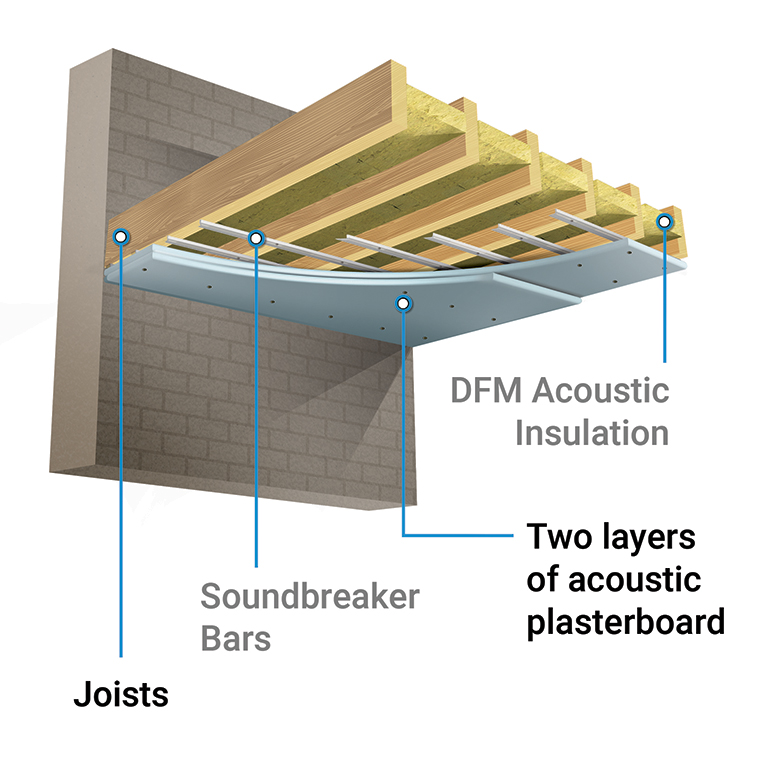
Sound Insulation Tests apply to each type of separating wall and floor in the building. This edition covers sound insulation requirements in dwelling-houses flats rooms for residential use and schools. For newer or remodeled multi-family dwelling units the various Building Codes throughout the United States require a measure of sound insulation between floors of multi-family dwellings. DFM acoustic insulation between floor joists is the best way of reducing airborne sound between floors. This is because sound insulation testing between such spaces may give unreliable results due to the. An airborne acoustic test will need to be passed to ensure compliance to the minimum standards in all UK Building Regulations for separating floors ceilings and walls between separate dwellings.
Airborne noise will travel through a floor ceiling and wall structure.
When testing separating walls or floors an airborne test is performed. Normally this is signed off by your building control officer based on the construction. This document which took effect on July 1st 2003 aims to improve standards of sound insulation in buildings between homes or in rooms used for residential purposes. Adjoining dwelling Other parts of the same building Airborne sound insulation Impact sound insulation. Can you design out noise issues. Patterson1 1 Professional Services Australian Building Codes Board Canberra Australia Abstract This paper discusses the recent changes to the Building Code of Australia BCA sound insulation requirements.
 Source: pinterest.com
Sometimes buildings are construction with first floor eaves and soffits. This level should easily. It is imperative that the structure is isolated and all weak points treated if airborne noise is to be reduced. This will also increase thermal insulation for the room above and below making them more comfortable to be in and quieter too. Sometimes buildings are construction with first floor eaves and soffits.
 Source: pinterest.com
Unlike standard floor soundproofing mats the SoundMat 3 Plus features an innovative 3 layer design helping to tackle the unwanted noise of everyday living or meeting Part E Building Regulations. The Building Codes specify a minimum architectural design standard of privacy of 50 STC Sound Transmission Class and a 50 IIC Impact Isolation Class. It is designed to meet the demands for improved acoustic insulation and combat the problems of noise pollution. What if you think this isnt enough. Archived versions of Approved Document E are available at.
 Source: pinterest.com
If the first floor soffits open into the joist bays these should be air sealed and insulated. Dwellings flats and rooms for residential use are to have reasonable resistance to. Conversions carried out after July 2003 should already have been tested and shown to have achieved the Building Regulation. What if you think this isnt enough. In flats converted before June 1992 there may have been little or no sound insulation improvement undertaken on the floor.
 Source: insulationsuperstore.co.uk
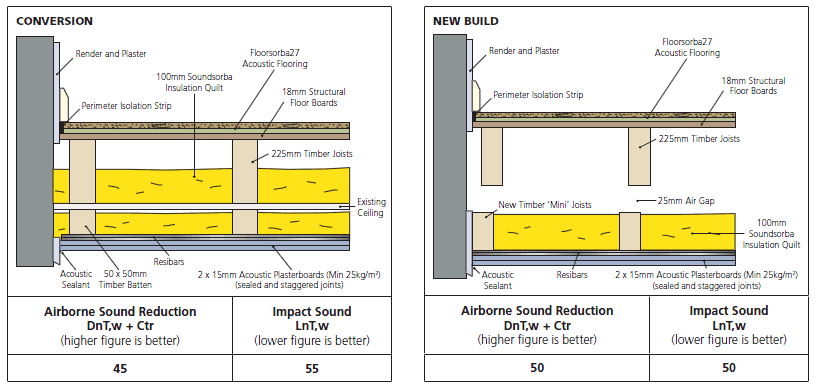
This is because sound insulation testing between such spaces may give unreliable results due to the. Airborne sound insulation D nTW C tr dB Impact sound insulation L nTw dB New build Change of use New build Change of use Walls 45 43 45 - - Floors stairs 45 43 62 64 Lower limit applies only to rooms for residential purposes. RECENT CHANGES TO THE SOUND INSULATION PROVISIONS OF THE BUILDING CODE OF AUSTRALIA Matthew J. In flats converted before June 1992 there may have been little or no sound insulation improvement undertaken on the floor. The Building Codes specify a minimum architectural design standard of privacy of 50 STC Sound Transmission Class and a 50 IIC Impact Isolation Class.
 Source: ro.pinterest.com
Airborne sound insulation D nTW C tr dB Impact sound insulation L nTw dB New build Change of use New build Change of use Walls 45 43 45 - - Floors stairs 45 43 62 64 Lower limit applies only to rooms for residential purposes. Unlike standard floor soundproofing mats the SoundMat 3 Plus features an innovative 3 layer design helping to tackle the unwanted noise of everyday living or meeting Part E Building Regulations. It is imperative that the structure is isolated and all weak points treated if airborne noise is to be reduced. Airborne Sound Insulation Testing. The goal is to ensure that after proper sound insulation measures.
 Source: noisestopsystems.co.uk
An airborne acoustic test will need to be passed to ensure compliance to the minimum standards in all UK Building Regulations for separating floors ceilings and walls between separate dwellings. It is imperative that the structure is isolated and all weak points treated if airborne noise is to be reduced. Sometimes buildings are construction with first floor eaves and soffits. Acoustic Requirements of Building Regulations. I would personally recommend putting is some sound absorption as you dont want to hear the.
 Source: pinterest.com
Archived versions of Approved Document E are available at. Acoustic Requirements of Building Regulations. The goal is to ensure that after proper sound insulation measures. If the first floor soffits open into the joist bays these should be air sealed and insulated. B213Impact sound insulation tests should be conducted on a floor without a soft covering eg.
 Source: noisestopsystems.co.uk
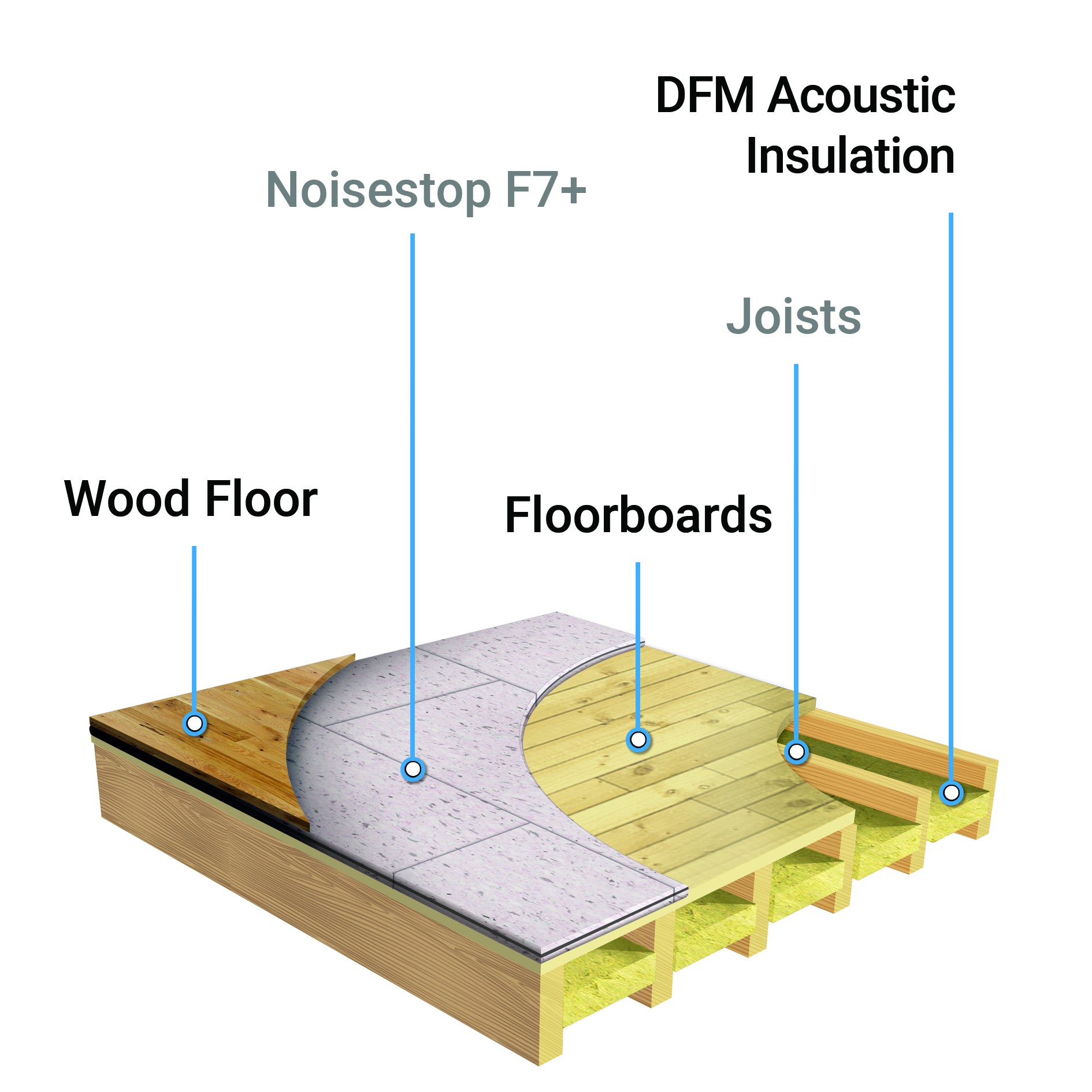
DFM acoustic insulation between floor joists is the best way of reducing airborne sound between floors. Paragraph 18 of Approved Document E specifies that sound insulation testing should not be carried out between living spaces and. Our other tried and tested floor soundproofing solution is the SoundMat 3 Plus 15mm system with acoustic mineral wool between floor joists. Putting insulation between the ground and first floor should in theory stop sound vibration and heat from moving between levels in your property. Airborne Sound Insulation Testing.
 Source: pinterest.com
The Regulations also divide sound into airborne sound and impact sound. The minimum level of airborne sound resistance for dividing walls or floors between homes is 45dB decibels in new builds and 43dB in conversion projects. Unlike standard floor soundproofing mats the SoundMat 3 Plus features an innovative 3 layer design helping to tackle the unwanted noise of everyday living or meeting Part E Building Regulations. Archived versions of Approved Document E are available at. It is designed to meet the demands for improved acoustic insulation and combat the problems of noise pollution.
 Source: soundsorba.com
DFM acoustic insulation between floor joists is the best way of reducing airborne sound between floors. Between living spaces and circulation spaces. Sometimes buildings are construction with first floor eaves and soffits. No sure about the Scottish Building Regs but are usually similar to Eng and Wales which would mean that internal partitionsfloors need to achieve 40 dB Rw however do not require testing to comply. The goal is to ensure that after proper sound insulation measures.
 Source: pinterest.com
Dwellings flats and rooms for residential use are to have reasonable resistance to. Stop airborne sounds between wooden floors with acoustic floor insulation. An airborne acoustic test will need to be passed to ensure compliance to the minimum standards in all UK Building Regulations for separating floors ceilings and walls between separate dwellings. The minimum level of airborne sound resistance for dividing walls or floors between homes is 45dB decibels in new builds and 43dB in conversion projects. Use acoustic floor insulation between the floor and ceiling joists.
 Source: acaraconcepts.com
Our other tried and tested floor soundproofing solution is the SoundMat 3 Plus 15mm system with acoustic mineral wool between floor joists. It outlines the main drivers for the changes and looks at the process used by. E2 does not require soundproofing around en suite bathrooms or in walls where there is a door. Walls are defined by Regulation 2 3 of the Building Regulations 2010 as. Archived versions of Approved Document E are available at.
 Source: pinterest.com
Carpet foam backed vinyl except in the case of a separating floor type 1 as described in this. Homes which have full home theatres or other sound equipment may desire sound proofing. Our other tried and tested floor soundproofing solution is the SoundMat 3 Plus 15mm system with acoustic mineral wool between floor joists. Dwellings flats and rooms for residential use are to have reasonable resistance to. What if you think this isnt enough.
 Source: paroc.cz
Our other tried and tested floor soundproofing solution is the SoundMat 3 Plus 15mm system with acoustic mineral wool between floor joists. Paragraph 18 of Approved Document E specifies that sound insulation testing should not be carried out between living spaces and. It outlines the main drivers for the changes and looks at the process used by. Unlike standard floor soundproofing mats the SoundMat 3 Plus features an innovative 3 layer design helping to tackle the unwanted noise of everyday living or meeting Part E Building Regulations. Adjoining dwelling Other parts of the same building Airborne sound insulation Impact sound insulation.
Source: pinterest.com
DFM acoustic insulation between floor joists is the best way of reducing airborne sound between floors. Section 911207 of the Los Angeles Building Code requires uniform minimum sound insulation standards and requirements to protect persons within designated noise sensitive buildings from excessive exterior noise through regulation of design construction and modification of such buildings in the vicinity of the Los Angeles International Airport. The test is achieved by placing a specialised omnidirectional loudspeaker in a source. Use acoustic floor insulation between the floor and ceiling joists. This document which took effect on July 1st 2003 aims to improve standards of sound insulation in buildings between homes or in rooms used for residential purposes.
 Source: soundproofingstore.co.uk
It is imperative that the structure is isolated and all weak points treated if airborne noise is to be reduced. RECENT CHANGES TO THE SOUND INSULATION PROVISIONS OF THE BUILDING CODE OF AUSTRALIA Matthew J. DFM acoustic insulation between floor joists is the best way of reducing airborne sound between floors. In flats converted before June 1992 there may have been little or no sound insulation improvement undertaken on the floor. Stop airborne sounds between wooden floors with acoustic floor insulation.
 Source: pinterest.com
Paragraph 18 of Approved Document E specifies that sound insulation testing should not be carried out between living spaces and. Approved Document Part E 2003 England and Wales What does Part E cover. Normally this is signed off by your building control officer based on the construction. Paragraph 18 of Approved Document E specifies that sound insulation testing should not be carried out between living spaces and. RECENT CHANGES TO THE SOUND INSULATION PROVISIONS OF THE BUILDING CODE OF AUSTRALIA Matthew J.
 Source: pinterest.com
We recommend using 100mm of acoustic floor insulation and a density of between. Cellulose fiberglass and rock wool are excellent sound retardants and can greatly deaden sound when installed between floors. DFM acoustic insulation between floor joists is the best way of reducing airborne sound between floors. Conversions carried out after July 2003 should already have been tested and shown to have achieved the Building Regulation. Any masonry wall or concrete floor will meet Part E2 requirements and timber or steel walls or floors only require the addition of some insulation and a slightly thicker plasterboard to be used.
This site is an open community for users to submit their favorite wallpapers on the internet, all images or pictures in this website are for personal wallpaper use only, it is stricly prohibited to use this wallpaper for commercial purposes, if you are the author and find this image is shared without your permission, please kindly raise a DMCA report to Us.
If you find this site beneficial, please support us by sharing this posts to your favorite social media accounts like Facebook, Instagram and so on or you can also save this blog page with the title building regulations sound insulation between floors by using Ctrl + D for devices a laptop with a Windows operating system or Command + D for laptops with an Apple operating system. If you use a smartphone, you can also use the drawer menu of the browser you are using. Whether it’s a Windows, Mac, iOS or Android operating system, you will still be able to bookmark this website.